
How exits from the city and contact with nature improve physical and mental well-being with Afrotitude Home
Full consciousness: returning to the essentials
Full consciousness is a practice of willing attention to the present moment, without judgment. Often associated with meditation, it is now recognized as a true tool of well-being, with proven benefits on physical, mental and emotional health.
Being fully present here and now
In our daily newspapers, which are punctuated by obligations, screens and constant demands, the mind tends to oscillate between the past and the future. The full consciousness invites us to pause: breathe, observe, feel. It is about reconnecting to what is, simply.
Coach Sev Joy, a specialist in personal development and self-consciousness, recalls that « peace is not found elsewhere or later, it grows in the present moment ». For her, full consciousness is a path of inner alignment through listening to the body, welcoming emotions and observing thoughts without attachment.
A scientific and human look
Psychiatrist Christophe André, a reference figure in the meditation of full consciousness in the French-speaking world, points out that this practice has nothing to do with flight or abandonment. On the contrary, it helps to cope better with the difficulties of life. Realizing what is happening within and around us, with kindness, helps to reduce stress, anxiety and mental ruminations.
He also insists on one essential point: full consciousness is not a performance. There is nothing to succeed or to force. It is a progressive training of attention, comparable to a muscle that is regularly reinforced.
Multiple Benefits
Regularly practiced, full consciousness can:
- improve concentration and mental clarity;
- promote better emotional management;
- reduce stress and mental fatigue;
- improve sleep quality;
- encourage a more peaceful relationship to oneself and others.
Sev Joy emphasizes the transformative dimension of this practice: when one learns to observe with gentleness, inner judgment gradually weakens, leaving room for more compassion, trust and freedom.
A practice accessible to all
Contrary to accepted ideas, full consciousness requires neither absolute silence nor long hours of meditation. A few minutes a day can be enough: to observe your breath, to eat in full consciousness, to walk in each step or to listen without anticipating your answer.

Christophe André recalls that regularity counts more than duration. It is the simple gestures of everyday life that give full consciousness all its scope.
The anchoring of nature: a full and lived consciousness
When full consciousness is practiced during out-of-town trips and in direct contact with nature, its beneficial effects are significantly enhanced. The distance from urban noise and daily stresses facilitates mental calm. Nature then becomes a privileged support of presence, naturally inviting to slow down and refocus.
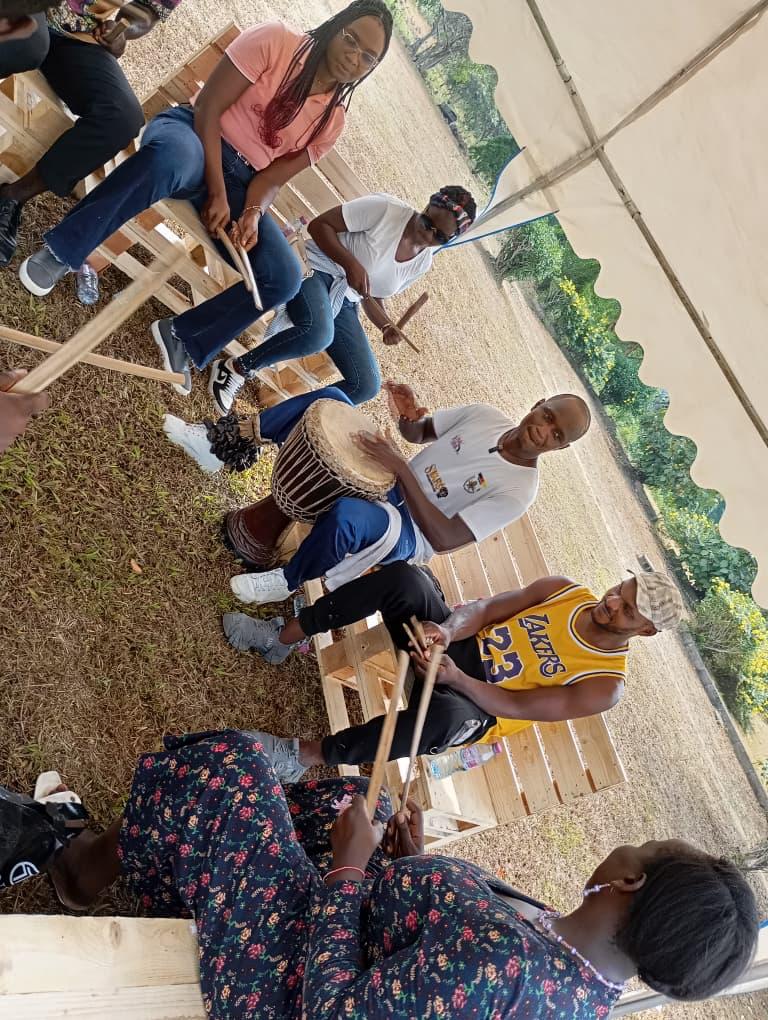
It is in this dynamic that Afrotitude Home offers immersive experiences in a natural environment, promoting reconnection to oneself, others and the environment. Walking in consciousness, sharing a local meal or simply watching the landscape become accessible practices, conducive to attention and healing. As Christophe André points out, nature spontaneously supports the calming of the mind, while Sev Joy recalls the importance of space and silence to enable the body to regain its balance.
Conclusion
Full consciousness, lived in a natural environment and outside the urban rhythm, is a powerful lever for global regeneration. It helps to reduce stress, clarify the mind, strengthen emotional balance and foster a lasting sense of inner peace.
The experiences offered by Afrotitude Home illustrate this alliance between conscious presence and living nature, providing a structured framework for resourcing, learning and personal transformation. In a context where the rhythms of life accelerate, choosing to slow down, exit the city and reconnect with nature amounts to making a conscious and lasting choice for well-being.


